In this section you will find:
Definitions of Scrum
Roles in a Scrum Team
Everything about Sprints
Scrum is an agile project management tool that enables transparent and adaptive teamwork!
.png) It is very often used in software development and has become a best practice in that industry, but it can be adopted in other types of smaller teams.
It is very often used in software development and has become a best practice in that industry, but it can be adopted in other types of smaller teams.
Adapting a new project management framework means learning new processes and mindset, but we have made an easy overview for you to dive into the Scrum framework.
Definitions of Scrum
.png) Scrum is a framework for teamwork.
Scrum is a framework for teamwork.
Its goal is to help generate value through adaptive solutions for complex problems.
It is based on working in increments so that the problems and adjustments can be spotted and addressed during the progress, instead of at the end, making sure we create the "right" product or service.
We use different terminology in different industries, companies, and cultures and it can be confusing to understand if you are not familiar with it. Here you have the most important terminology in Scrum.
Roles in a Scrum Team
There are three roles in the Scrum Team
✅Scrum Master
💾Product Owner
🏋️Team Members/Developers
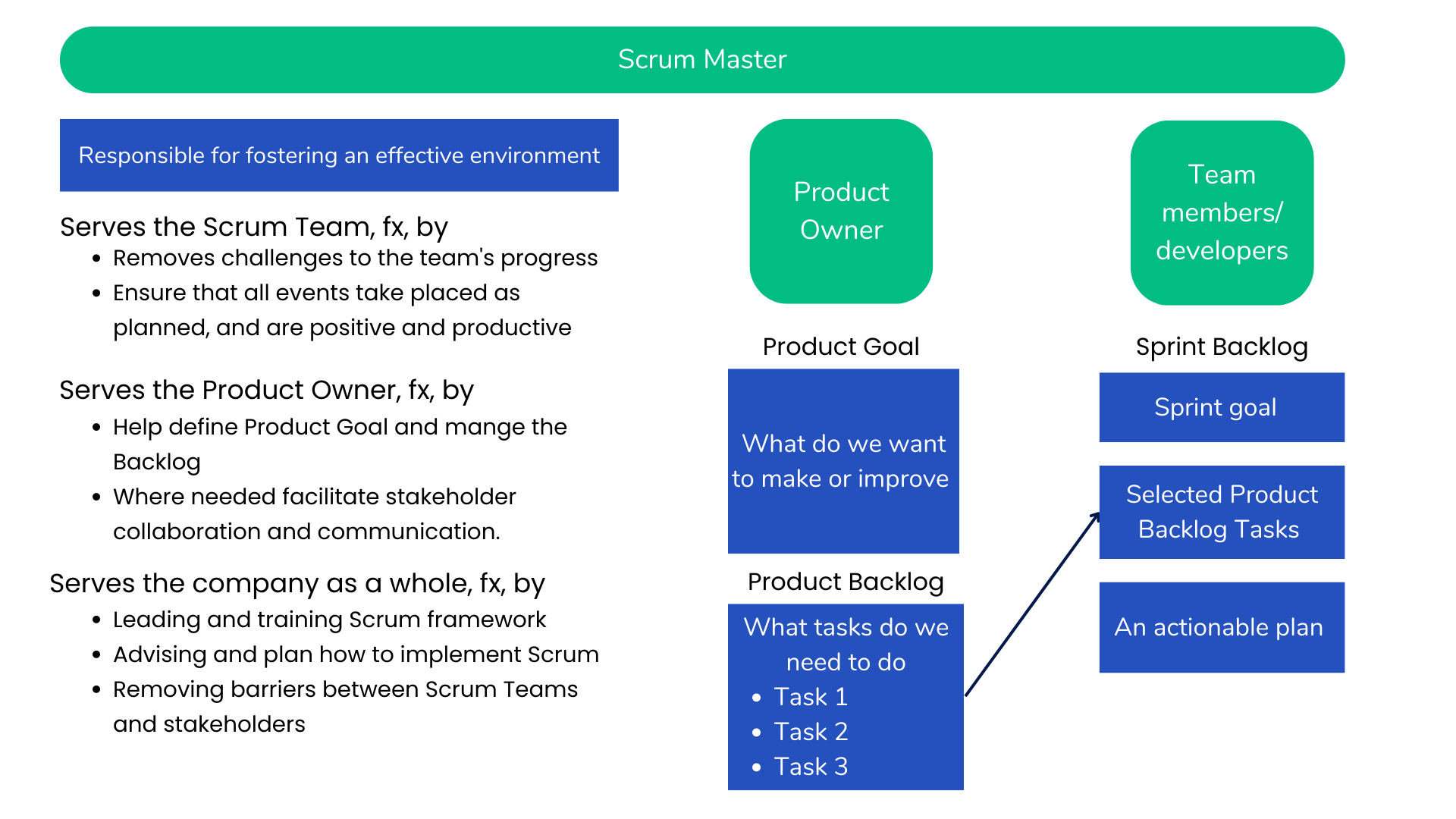
Scrum Master is accountable for team effectiveness by helping the team and enabling them to improve practices, removing obstacles that hinder team progress, and facilitating relationships with stakeholders.
Product Owner is accountable for the output from the work of the Scrum team, and their goal is to maximize the value of that work. They are responsible for developing and clearly communicating both the Product Goal and the Product Backlog and making sure the Backlog is transparent, visible, and well-understood.
Team members/Developers are responsible for working on the Backlog items in a Sprint and converting them into valuable Increments. They are accountable for planning the Sprint and Sprint Backlog, making sure that the Increments uphold the standard set by the team, adapting the plan when necessary, and keeping each other accountable in a professional way.
.png)
Everything about Sprints
Sprints are where the Scrum team turns their ideas into value. It is a time frame for specific work and is often about a month but can be shorter.
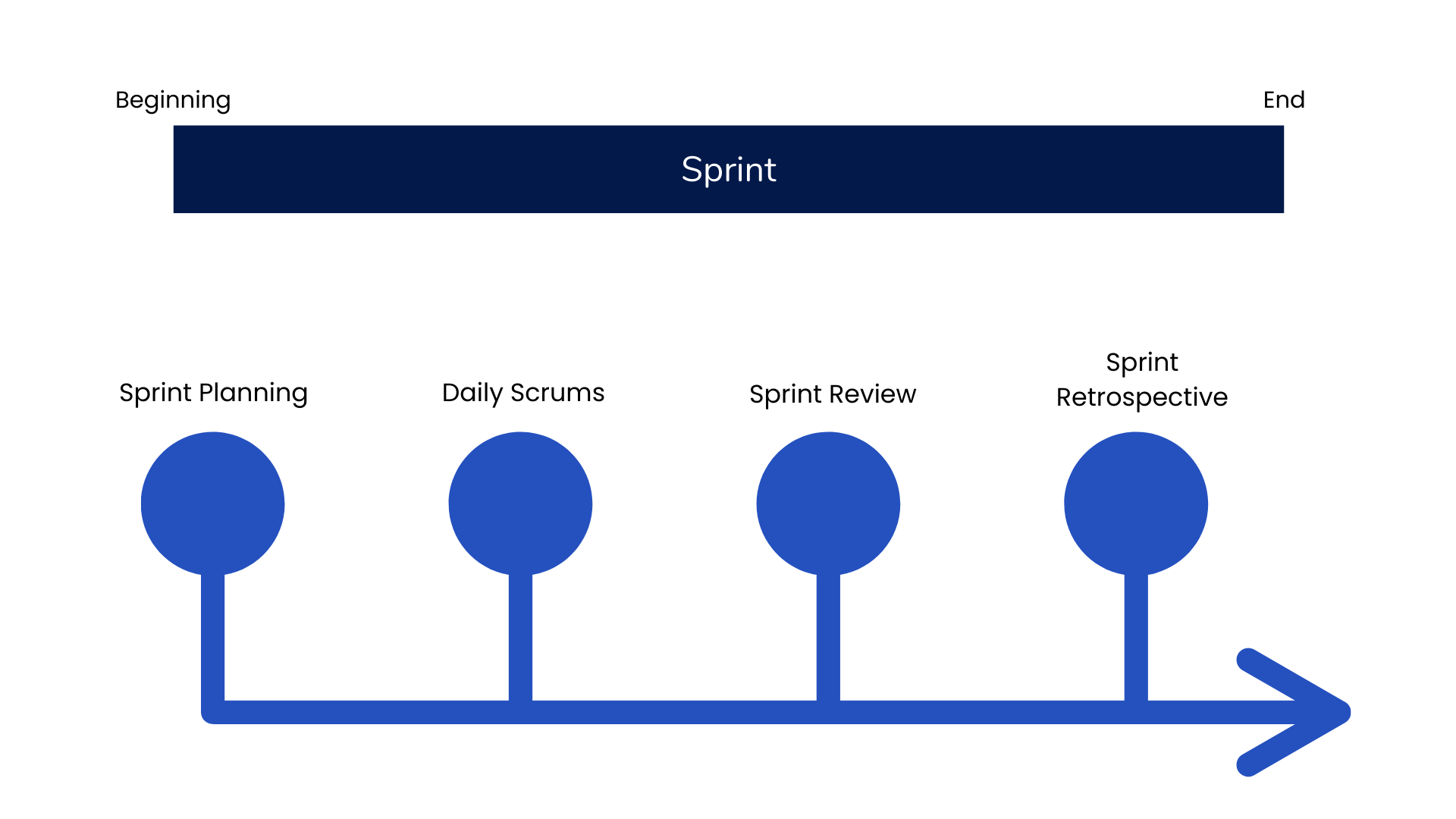
There are four main things that happen in a Sprint.
.png)
📝Sprint Planning
The Sprint starts by laying out work that is to be done in the Sprint, and the plan is made by the entire Scrum team. During the sprint planning the team should discuss these topics;
- Why is this Sprint Valuable?
The Product Owner proposes how the product or service could be made to be more valuable, and the entire Scrum Team collaborates to define a Sprint Goal that is clear about how the sprint is valuable to stakeholders. - What can be Done in this Sprint?
The Team members/Developers, in discussion with Product Owner, select the tasks from the Product Backload to work on in the Sprint. You can refine the tasks during the process which can help confidence and understanding. - How will the chosen work get done?
For each Product Backlog Task chosen, the Developers plan how to conduct their work so that the tasks can be Done and uphold the standard set by the team.
Planning should not take more than about 8 hours for a month-long Sprint.
🗨️Daily Scrum
Is a 15-minute meeting for the Developers that happens every working day in the Sprint. The meeting can have whatever structure the team chooses, but the discussion should focus on how they are progressing toward the Sprint Goal, and what their plan is for the next working day.
🖊️Sprint Review
This is a working session that happens close to the end of the Sprint. Here the Scrum Team reviews the outcome of the Sprint, and if the environment has changed. Based on the revision they decide on adjustments for the future. The Team presents the results to the key stakeholders and then discusses the progress toward the Product goal.
This is a max 4-hour event for a one-month sprint.
🪞Sprint Retrospective
This is where the Scrum Team reflects on people, interactions, processes, tools, and the definition of Done(standard of an Increment) in the last Sprint. The goal is to increase quality, and effectiveness and learn from the experiences of our previous actions.
It should take max 3 hours for a one-month sprint. This is the last event in a Sprint and concludes it. Then a new Sprint starts, and the Scrum Team repeats the process.
There are definitely more things to add about the Scrum framework, but now you have an overview of the framework that can help you decide if it could work for you and your team!
